
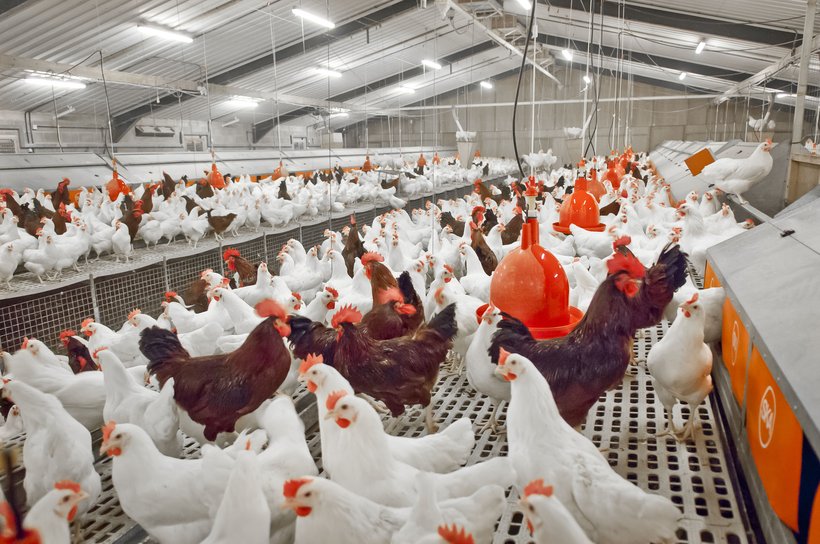
The most critical truth in hatching egg imports is this: a single faulty shipment means thousands of failed hatches and serious financial loss. Hatching eggs for breeding and commercial production are a completely different product from ordinary table eggs; they carry a living embryo and demand the right conditions at every stage from origin to incubator. For this reason, importing hatching eggs is a process that must be managed not just around price but around health, genetics, hatch performance and regulation.
This guide covers the 5 critical factors you must evaluate as an importer or hatchery operator before making a decision.
1. Origin Country Disease Status and Veterinary Health Certificate
The first and most decisive criterion in importing is the health status of the country and breeder flock the eggs come from. Because hatching eggs can transmit vertically transmitted diseases to the offspring, this matter is critical from both a legal and a biological standpoint.
The main diseases to watch are Avian Influenza (bird flu), Newcastle disease and Salmonella. Because a country can suspend poultry and hatching egg imports from countries with active outbreaks, the origin country’s current disease status (WOAH/OIE status) must be confirmed before shipment. A country open to imports today can close tomorrow following an outbreak notification.
The veterinary health certificate for imported hatching eggs must, by regulation, be retained at the facility to be presented during inspections. This certificate documents that the flock is free of specific diseases and has passed the required tests. Import procedures are carried out through the Veterinary Border Control Point, with an import suitability letter and a veterinary entry document.
2. Breeder Flock Quality and Genetics (Line/Breed)
The value of a hatching egg comes largely from the quality of the breeder flock that produces it. When you buy the egg, you are really buying a genetic potential.
Elements you should evaluate:
- Genetic line/breed: In broiler production, registered lines such as Ross and Cobb; in layer production, lines such as Lohmann and Hy-Line are decisive for performance. The line must match your target output (meat or eggs).
- Flock age: Eggs from very young or old flocks can show lower fertility and hatchability. Where the flock sits on its production curve matters.
- Vaccination and health monitoring program: The breeder flock should have undergone regular health monitoring and have a documented vaccination program.
- Uniformity: The flock’s homogeneity directly affects the consistency of egg quality.
Requesting the flock’s performance and health records from the supplier is the most concrete indicator of quality.
3. Fertility Rate and Hatchability
The economic success of the import depends on two figures: fertility rate (how many of the eggs are fertile) and hatchability (how many of the fertile eggs turn into healthy chicks). These two are different and both must be tracked.
In a well-managed breeder flock, fertility generally runs at 90–95%, while hatchability of fertile eggs runs at 80–90%. However, these rates vary with flock age, storage duration, transport conditions and hatchery management. Therefore:
- Have the supplier write the guaranteed minimum fertility/hatchability rates into the contract.
- Clarify compensation or return terms in case of low hatchability.
- Test the first shipments with smaller batches and measure the real hatch rate under your own conditions.
Remember: even high fertility can turn into low hatchability due to poor transport or storage. The next two factors determine exactly that.
4. Egg Freshness, Storage and Transport Conditions
The most common misconception about hatching eggs is that they require a “cold chain.” This is false. Unlike table eggs, if hatching eggs are stored at refrigerator temperature (~4°C), the embryo is damaged and hatchability collapses.
The correct conditions are:
- Temperature: A range of around ~15–18°C is generally ideal. This is cool enough to halt embryonic development but warm enough not to kill the embryo.
- Humidity: Around 70–80% relative humidity prevents excessive water loss from the egg.
- Freshness: Eggs should be set as fresh as possible. The general rule is to set them within 7–10 days ideally; the longer the wait, the lower the hatchability.
- Positioning: Eggs should be placed pointed-end down.
- Shock and vibration: Sudden temperature changes during transport (sweating), jolting and vibration significantly reduce hatchability.
In importing, the logistics plan must be designed to preserve these conditions door to door. Temperature-monitored, controlled-environment transport should be preferred.
5. Regulations, Permits, Customs and Traceability
The final factor is the legal backbone of the process. Hatching eggs are classified under “reproductive products” in regulation and are subject to veterinary control. Failing to obtain the required permits and clearance before import can cause the shipment to be held at customs or destroyed.
Points to watch:
- Import permit / suitability: Procedures are carried out through the Ministry of Agriculture and Forestry (General Directorate of Food and Control) and the Veterinary Border Control Point. An import suitability letter and a veterinary entry document are required.
- Customs/HS code: Hatching (fertilized) chicken eggs are generally classified under heading 0407.11. The correct code affects the duty and inspection process.
- Relevant regulation: The Hatchery and Breeder Poultry Establishments Regulation governs hatcheries’ obligations to source from approved establishments and to keep records.
- Traceability and records: Records such as the origin of eggs arriving at the hatchery, how many days old they are, the breed, the setting date, and the rates of infertile eggs and embryo deaths must be kept. These records are both a legal obligation and valuable for quality management.
Because regulatory details and country-specific requirements can change over time, confirming the current requirements with the Ministry and your customs broker before each shipment is the safest approach.
Summary Checklist
| Factor | What to Check |
|---|---|
| 1. Health & Certificate | Origin country disease status (bird flu, Newcastle, Salmonella), veterinary health certificate |
| 2. Genetics & Flock | Line/breed, flock age, vaccination program, performance records |
| 3. Fertility & Hatchability | Guaranteed rates, written into contract, test batch |
| 4. Freshness & Transport | ~15–18°C, 70–80% humidity, 7–10 days freshness, shock/vibration prevention |
| 5. Regulation & Customs | Import suitability, HS code 0407.11, veterinary entry document, records/traceability |
Frequently Asked Questions (FAQ)
Is a hatching egg different from a table egg? Yes, completely. A hatching egg is fertile and carries a living embryo; it is used to produce chicks for breeding and commercial purposes. For this reason, its storage and transport conditions differ from those of table eggs.
Are hatching eggs stored in a refrigerator? No. Refrigerator temperature (~4°C) damages the embryo. The ideal storage range is generally ~15–18°C, with humidity around 70–80%.
Which document is mandatory in importing? The veterinary health certificate for imported hatching eggs must be retained at the facility to be presented during inspections. An import suitability letter and a veterinary entry document are also required.
Are fertility and hatchability the same thing? No. Fertility shows how many of the eggs are fertile; hatchability shows how many of the fertile eggs turn into healthy chicks. The two must be evaluated together.
Why does the origin country matter? A country can suspend imports from countries with active outbreaks (especially bird flu). For this reason, the origin country’s current disease status must be confirmed before shipment.
Conclusion
Hatching egg imports are an efficient sourcing method when managed correctly, and a high-risk operation when managed poorly. Health status, breeder genetics, fertility/hatchability, transport conditions and regulation — when these five factors are addressed together, a successful import is achieved. None is sufficient on its own; the weakest link in the chain determines the result.
Working with a reliable partner who manages every stage of this process — healthy origin, correct documentation, controlled transport and regulatory compliance — under one roof minimizes risk. For your hatching egg supply and import processes, get in touch with us.