
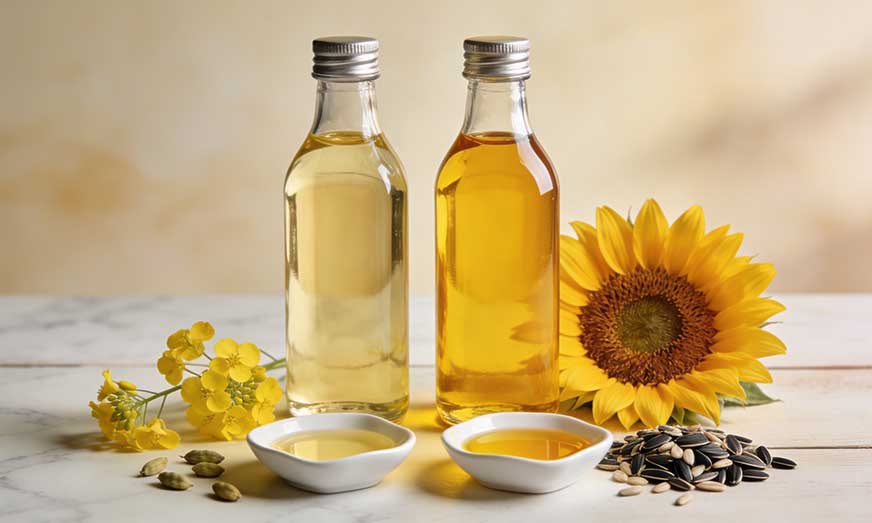
For buyers and importers, the most critical question in the 2026 vegetable oil market can be summed up in one line: is supply security on the side of sunflower, or rapeseed (canola)? In the first half of 2026, global vegetable oil prices returned to the top of the agenda as the FAO vegetable oil price index reached its highest level since July 2022. Tightening supply from the Black Sea, a structural rise in biofuel demand, and higher energy and freight costs are reshaping the balance between sunflower and rapeseed.
This guide covers the standout market trends of 2026, the price and supply dynamics of the two oils, Turkey’s particular position, and — as a buyer — which choice makes more sense in which situation.
Why Are Vegetable Oil Prices Rising in 2026?
The defining theme of 2026 is “tight supply, strong demand.” Three main factors are pushing prices up:
- Biofuel demand: The EU’s RED III directive and the US Renewable Fuel Standard (RFS) are channeling more and more rapeseed and soybean oil into fuel feedstock. This shrinks the volume available to the food sector.
- Black Sea tightening: Expectations of a sharp drop in Ukraine’s harvest and logistical disruptions in the region have tightened sunflower supply.
- Cost pressure: Rising energy and freight costs have made crushing and refining more expensive, pushing final prices higher.
When these three factors work together, the result is a volatile market that buyers need to watch closely.
Sunflower Oil: 2026 Trends
Sunflower oil is one of the most fragile items on the supply side in 2026. Global sunflower oil production sits at around 20.7 million tonnes in the 2025/26 season — only a marginal increase over the previous season — which leaves the market vulnerable to any disruption.
Production and export disruptions in Russia and Ukraine, the world’s largest sunflower oil producers, have pushed prices up. Industry sources point to double-digit declines in Ukrainian and EU output. The result: by mid-2026 the global sunflower oil benchmark climbed to around USD 1,800 per tonne, moving to a premium over rapeseed oil, which it had long traded below (IMF/FRED data). This is a configuration not often seen historically and the clearest sign of the supply squeeze in sunflower.
Another standout trend in sunflower oil is the shift toward high-oleic varieties. Favored by the food industry and industrial frying for its longer shelf life and oxidative stability, high-oleic sunflower oil sells at a per-tonne premium over standard grades and is gaining market share.
Rapeseed (Canola) Oil: 2026 Trends
Rapeseed oil is more of a demand-side story in 2026. It helps to clarify the difference between “rapeseed” and “canola”: canola is the food-grade, low-erucic-acid variety of rapeseed. The market mostly processes this food-grade canola.
The strongest driver behind rapeseed/canola oil in 2026 is biofuel. The EU’s renewable diesel and sustainable aviation fuel (SAF) targets place rapeseed oil on a structural demand floor. Industry analyses project that the rapeseed/canola oil market will grow at an average of around 3.8% per year over 2026–2035, with both food and fuel demand powering that growth.
On the supply side, rapeseed leans on a more diversified geography than sunflower: Canada, the EU, Australia, China and India. Australia’s Southern Hemisphere harvest provides a supply window that counterbalances the Northern Hemisphere seasonally. That said, trade-policy risks exist: high tariffs imposed by China on Canadian canola products can reroute global flows. By mid-2026 the global rapeseed oil benchmark traded at around USD 1,600 per tonne — somewhat below sunflower.
Sunflower or Rapeseed? A 2026 Comparison
| Criterion | Sunflower Oil | Rapeseed / Canola Oil |
|---|---|---|
| 2026 price trend | High, at a premium (~$1,800/t) | Relatively more affordable (~$1,600/t) |
| Main price pressure | Black Sea supply squeeze | Biofuel demand |
| Supply geography | Concentrated (Russia, Ukraine) | Diversified (Canada, EU, Australia) |
| Geopolitical risk | High (Black Sea dependent) | Moderate (trade-tariff risk) |
| Culinary/sensory | Familiar taste, broad acceptance | Neutral taste, high smoke point |
| Health profile | Linoleic/oleic, vitamin E | Low saturated fat, omega-3 |
| Biofuel competition | Low–moderate | High |
Prices are mid-2026 benchmark levels (IMF/FRED) and change weekly. Always confirm current spot pricing before contracting.
The Turkey Picture: An Import-Dependent Market
Turkey is structurally a net importer in the vegetable oil market. The sector is roughly 75% dependent on imported oilseed raw material (Turkish Vegetable Oil Industrialists’ Association). Sunflower oil remains Turkey’s most consumed edible oil; annual consumption is projected at around 1.4 million tonnes, while domestic production covers only part of that demand.
The 2025/26 season was a difficult one for Turkey. According to USDA data, sunflower seed production fell to around 1.2 million tonnes, largely due to severe drought in the Thrace (Trakya) region, where yield losses were reported to exceed 50% of the long-term average. This decline drove imports up to around 1 million tonnes, with sourcing again weighted toward Black Sea countries plus alternative markets such as Bulgaria, Moldova, Romania and Argentina.
Within this picture, canola is an emerging domestic alternative for Turkey. In Thrace, especially around Edirne, farmers are increasing canola planting as a more drought-resistant crop. The Ministry of Agriculture and Forestry’s 2026 support package, which announced support of 930 lira per decare for sunflower and soybean, is also a policy signal affecting the production side. Turkey’s medium-term tendency to diversify supply channels and broaden its domestic oilseed base will be decisive for both sunflower and rapeseed.
Strategic Takeaways for Buyers and Importers
Key principles for buyers looking to position well in the 2026 market:
- Supply diversification: Dependence on a single origin (especially the Black Sea) is risky. Alternative sources such as Argentina, Bulgaria and Romania, along with rapeseed’s multi-geography supply, can provide balance.
- Substitution flexibility: Buyers able to switch between sunflower, rapeseed, soybean and palm oil based on price and policy signals are more resilient to cost shocks.
- Timing: Sunflower prices typically soften after the Black Sea harvest (October–December) and firm ahead of harvest (April–July). Buyers with storage capacity can benefit from the post-harvest window.
- Contract discipline: In high volatility, staggered and smaller-volume purchases can reduce risk compared with large open positions.
Standout Trend Themes for 2026
In short, the 2026 vegetable oil market is defined by these themes: biofuel demand competing with food for volume, Black Sea–driven supply fragility, the growing impact of climate/drought risk on harvests, the shift toward high-oleic and premium varieties, and buyers’ search to diversify their supply geography. In this environment there is no single right answer to “sunflower or rapeseed”; the answer depends on the buyer’s risk appetite, intended use and supply flexibility.
Frequently Asked Questions (FAQ)
Which is more expensive in 2026, sunflower oil or rapeseed oil? By mid-2026, sunflower oil traded at a premium to rapeseed/canola oil — around USD 1,800 per tonne — because of the Black Sea supply squeeze, while rapeseed oil was around USD 1,600 (IMF/FRED benchmark prices).
Are rapeseed and canola the same thing? Canola is the food-grade, low-erucic-acid variety of rapeseed. So every canola is a rapeseed, but the product traded in the edible market is generally food-grade canola.
What is pushing sunflower oil prices up in 2026? The main factors are production and export disruptions in the Black Sea region, limited growth in global production, and rising energy and freight costs.
Why is Turkey import-dependent on sunflower oil? Turkey’s domestic sunflower production does not meet its domestic consumption; the sector is about 75% dependent on imported oilseed raw material, and the gap is filled by imports. In 2025/26, drought widened that gap further.
What is driving demand for rapeseed/canola oil? The strongest driver is biofuel: the EU’s RED III directive and renewable diesel/SAF targets place rapeseed oil on a structural demand floor.
Conclusion
The 2026 vegetable oil market stands out as a “tight and volatile” year rather than a “cheap and abundant” one. Sunflower carries high supply risk because of its dependence on the Black Sea but remains strong in taste and acceptance; rapeseed/canola has a more diversified supply base but sits under the pressure of biofuel demand. The right choice varies with the buyer’s intended use, risk management and supply flexibility.
In this choppy environment, what makes the difference is reliable supply channels and the right timing. To work with a partner offering origin diversity and contract discipline in sunflower and rapeseed/canola oil supply, get in touch with us.